How to Improve Your Month-End Process
Improving your month-end process is relatively straightforward. But it requires documentation, feedback, and review. Not a one-time fix, an ongoing commitment to getting better.
I've worked with finance teams where month-end was chaos and teams where it ran like clockwork. The difference isn't skill or headcount. It's whether they've documented the process well and have the discipline to maintain that documentation and improve the process each month.
External dependencies are your biggest bottleneck
Anything that relies on someone outside the finance team is where things tend to stall. That person has their own priorities. They're not thinking about your month-end close.
The fix is proactive communication and making it easy for them.
Document who the person is. Document who the backup is if they're unavailable. Write down exactly what they need to provide and when.
Then go a step further. Give them a templated email they can send. Give them a spreadsheet with the fields they need to fill in. Set a reminder to prompt them before month-end, not when you're already waiting on them.
One client I worked with had a three-person finance team. One step in their process required someone outside the team to gather figures from external parties. It was always late, always a blocker.
We gave that person a heads-up before month-end. Gave them a template email and a spreadsheet to fill in. Reminded them as month-end approached. Followed up if needed.
After three to four months, that step went from a regular blocker to something that just happened without anyone thinking about it.
Work papers that scale
Your work papers are your external thinking. They're how you repeat the same process clearly, month after month.
When you first create a process, whether it's a reconciliation or a calculation, you figure it out on the fly and create some supporting docs to get through. That's fine for the first pass.
But as your month-end matures, those work papers should evolve. Standard format. Clear instructions. Defined input cells. Supporting data where needed.
Well-structured work papers do three things:
1. Help you come back to it each month without re-learning the process
2. Surface errors quickly because you know where to look
3. Allow other people to take over the task
That third point matters. One of the goals of improving month-end is to push work down. You want more junior people handling the repeatable tasks so senior people can focus on judgement calls and exceptions. You can only delegate effectively if the work paper is clear enough for someone else to follow.
The master timeline
You need a single document showing where everything is at.
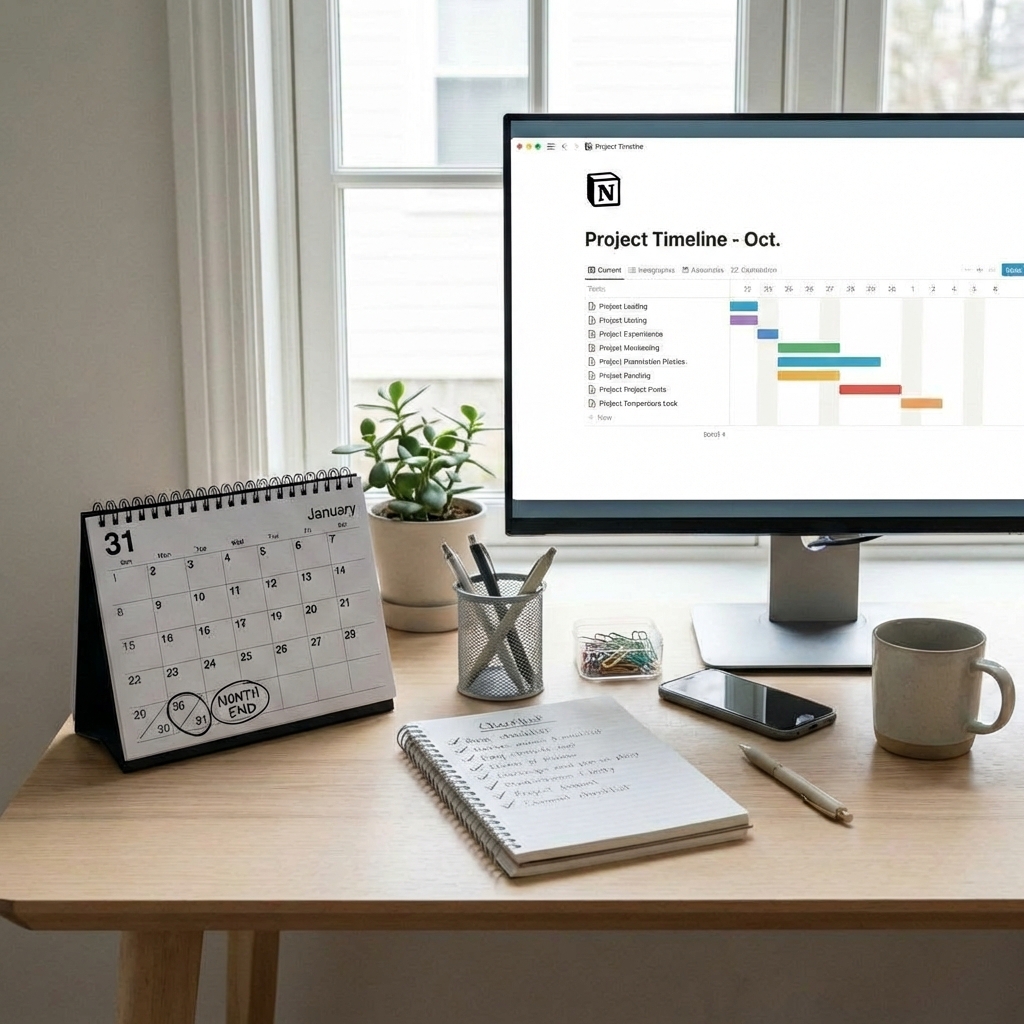
This can be a Gantt chart, a calendar, a spreadsheet, or a tool like Notion. The format matters less than the content.
Every task should be listed. Each task needs an owner, a due date, and a link to the relevant work paper. If a task has a dependency on another task, that should be noted.
This gives you visibility. You can see what's done, what's in progress, and what's blocked. You can spot problems before they become urgent.
Daily standups
During the month-end close, catch up with the team once or twice a day.
These don't need to be long. The point is to bring blockers to the surface early. If someone is stuck waiting on something, you want to know now, not three days later when it's holding up everything downstream.
Short, frequent check-ins keep momentum and stop small issues from compounding.
Start small
You don't need to overhaul everything at once.
Pick one part of your process that causes friction. Document it. Improve it. After month-end, reflect on what worked and what didn't. Make changes.
Your documentation should be live. You should always be updating it and building on what you've done.